
Things I've Stopped Tracking (And My Life Got Better)
Tracking everything—water, sleep, steps, mood—was supposed to help. Instead, it became one more thing to manage. Here's what happened when I stopped, and why my life got better.
GENTLE TOOLS & SUPPORTMYTH BUSTING & TRUTH TELLING
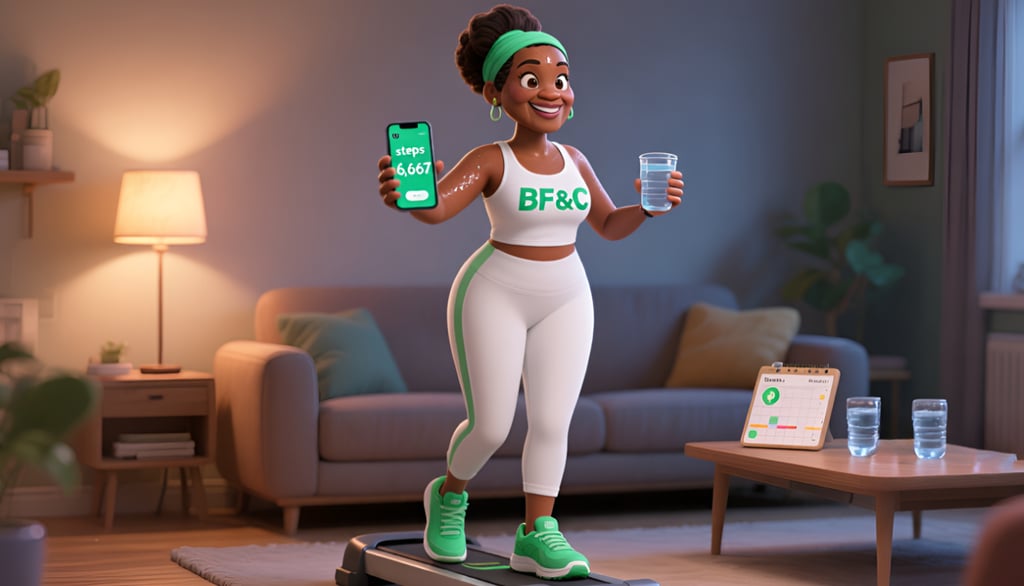
Let me tell you about the year I tracked everything.
Water intake. Sleep quality. Steps. Mood. Energy levels. Productivity. Screen time. Habits.
I had apps for all of it. Color-coded spreadsheets. Charts that showed my "progress."
I was going to optimize my way out of exhaustion.
I absolutely did not.
Instead, I added one more thing to manage. One more way to measure myself. One more opportunity to feel like I wasn't doing enough.
What nobody tells you about tracking everything is that it doesn't make you healthier. It makes you hypervigilant.
And when your brain is already foggy, when your nervous system is already overwhelmed, when you're already carrying too much—
Hypervigilance isn't support. It's surveillance.
So, I stopped.
And you know what happened?
Nothing catastrophic. My health didn't collapse. I didn't suddenly become wildly irresponsible.
I just... relaxed.
This post is about the things I stopped tracking and why my life actually got better when I did.
The Tracking Trap aka How Wellness Culture Sold Us Anxiety
Tracking started with good intentions, right?
"If you can measure it, you can improve it."
Sounds reasonable. Sounds scientific. Sounds like the kind of thing responsible adults do.
But here's what that philosophy ignores:
Not everything worth doing is worth measuring.
Especially for women in midlife who are navigating brain fog, hormonal chaos, chronic stress, and the mental load of managing everyone's everything.
Tracking often becomes another unpaid job.
Another task on the list. Another way to prove you're "doing it right." Another metric to fail at when your body doesn't cooperate with your spreadsheet.
Wellness culture has convinced us that if we just track enough data points, we'll finally figure out the formula. The perfect combination of sleep + water + steps + habits that will make us feel good again.
But you know what the data really shows?
You're tired.
And no amount of tracking is going to change the fact that you're navigating a biological transition while the world keeps handing you more to manage.
So why are we spending our limited energy collecting evidence of our own exhaustion?
What I Stopped Tracking (And What Happened)
1. Water Intake
What I used to do
Track every glass. Aim for 8 a day. Feel guilty when I only hit 6. Stress about whether I was "hydrated enough."
What I do now
Drink when I'm thirsty.
What happened
Literally nothing. I'm not more dehydrated. I'm just less anxious about it.
Turns out, your body has a built-in hydration tracker. It's called thirst (duh).
And unless you have a specific medical condition that requires monitoring fluid intake, you probably don't need an app to tell you when to drink water.
The pressure to hit an arbitrary number wasn't making me healthier. It was making me think about water 47 times a day when my brain had other things to process.
Let me be clear.
Chronic dehydration is real. But for most of us, the problem isn't that we're not tracking enough, it's that we're ignoring our body's signals because we're too busy tracking other things.
2. Sleep Hours
What I used to do
Wear a sleep tracker. Check the app every morning. Obsess over "sleep score." Panic when it was low. Try to "fix" my sleep with 17 different interventions.
What I do now
Notice how I feel when I wake up.
What happened
I stopped spending the first 10 minutes of every morning analyzing data and started just... waking up.
Sleep tracking is supposed to help you sleep better.
But when you wake up, check your score, see it's "poor," and then spend the day anxious about your sleep quality, you're not fixing sleep. You're creating a new source of stress.
And for women in midlife? When perimenopause wakes you up at 3am for no reason? When night sweats disrupt your rest? When hormones make sleep unpredictable?
A sleep tracker that tells you what you already know (you slept badly), isn't helpful. It's just documenting your struggle.
Here are some things that really help.
Noticing patterns without quantifying them.
"I don’t sleep well when I drink caffeine before bed." That's enough data. You don't need a graph.
3. Steps / Movement
What I used to do
Aim for 10,000 steps a day. Feel accomplished when I hit it. Feel like a failure when I didn't.
What I do now
Move when my body wants to move. Rest when it doesn't.
What happened
I stopped tying my self-worth to an arbitrary number invented by a Japanese marketing campaign in the 1960s. (Seriously. Look it up. 10,000 steps wasn't science. It was a pedometer brand name.)
Some days I walk. Some days I don't. Some days my body craves movement. Some days it craves stillness.
And you know what? My health didn't collapse when I stopped measuring.
The truth
Movement is good for you. But the pressure to hit a daily number regardless of how your body feels, regardless of your energy, regardless of what else you're managing, isn't healthy. It's compliance.
4. Mood Tracking
What I used to do
Log my mood multiple times a day. Rate it on a scale. Look for patterns. Try to "fix" bad moods.
What I do now
Feel my feelings without analyzing them.
What happened
I stopped treating my emotions like a problem to solve.
Do you know what mood tracking taught me? I have moods (what a revelation). They fluctuate. Sometimes there's a reason. Sometimes there’s not.
And constantly checking in on my emotional state, rating it, graphing it, looking for trends, didn't make me more emotionally regulated.
It made me hyperaware of every shift. Every dip. Every moment I wasn't "optimized."
For women in midlife
Hormonal fluctuations cause mood changes. That's not something you can "fix" with better data. It's something you navigate.
And sometimes the most supportive thing you can do is stop asking yourself, "How do I feel right now?" seventeen times a day.
5. Productivity / Time Tracking
What I used to do
Track how I spent every hour. Time-block my days. Measure output. Try to be "efficient."
What I do now
Do what needs doing. Rest when I need rest.
What happened
I stopped performing productivity theater for an audience of me.
Time tracking makes sense if you're billing clients or managing a team.
But for personal productivity? For a woman in midlife trying to manage brain fog while tracking her hours like she's her own project manager?
That's not optimization. That's exhausting yourself with paperwork about your own life.
The truth
You know when you've had a productive day. You can feel it. You don't need data to confirm it.
And on days when you're foggy, when you're tired, when you're navigating, forcing yourself to document your "inefficiency" doesn't motivate you. It just makes you feel worse.
6. Habit Tracking
What I used to do
Track streaks. Check boxes. Feel pressure to maintain consistency. Panic when I broke a streak.
What I do now
Do things when they're supportive. Skip them when they're not.
What happened
I stopped treating every helpful habit like a commitment I had to honor even when it stopped being helpful.
Habit tracking works on the assumption that consistency is always good.
But what if your body needs something different today than it needed yesterday?
What if the morning routine that felt supportive last week now feels like pressure?
What if the habit that helped when you were less tired now feels like one more thing to manage?
Midlife is not static.
Your needs change. Your capacity changes. Your body changes.
And rigidly tracking habits, feeling like you "failed" when you skip a day doesn't honor that.
Flexibility isn't failure. It's responsiveness.
What I Track Now (Absolutely Nothing)
So if I'm not tracking all these things, what am I doing?
I'm noticing.
There's a difference.
Tracking says: "Document this. Measure it. Analyze it. Find patterns. Optimize."
Noticing says: "Huh. That's interesting. I feel foggy after scrolling on my phone all night." And then you move on.
Noticing doesn't require a spreadsheet. It doesn't require consistency. It doesn't require you to prove anything.
It's just awareness without the burden of data collection.
Examples:
Instead of tracking water, I notice when I'm thirsty. I drink.
Instead of tracking sleep, I notice how I feel in the morning. "I'm tired today.”
Instead of tracking steps, I notice when my body wants to move. Some days that's a walk. Some days it's stretching. Some days it's nothing.
Instead of tracking mood, I notice how I feel. "I'm irritable today" doesn't need to be logged and graphed. It just needs to be acknowledged.
Instead of tracking productivity, I notice what got done and what didn't. That's it.
Instead of tracking habits, I notice what feels supportive and do more of that. When something stops feeling good, I stop doing it.
See the difference?
One requires management. The other just requires presence.
When Tracking Actually Helps (The Exceptions)
Look, I'm not saying tracking is always bad.
There are times when data is genuinely useful:
Medical conditions that require monitoring
Blood sugar for diabetics. Blood pressure for hypertension. Symptoms for diagnosis. Real medical needs = real reason to track.
Short-term experiments
"I wonder if dairy is making my brain fog worse." Track for two weeks, notice patterns, decide. Then stop tracking.
Professional requirements
Billing hours. Project management. Work that requires time tracking.
All of these are specific, short-term, or medically necessary.
They're not "track everything forever to prove you're doing life right."
Why Tracking Fails for Tired Brains
Here's what wellness culture won't tell you:
Tracking requires cognitive load.
You have to remember to track. You have to input data. You have to analyze. You have to act on insights.
And when your brain is already foggy? When your mental capacity is already stretched? When you're already managing more than you should be?
Tracking becomes one more thing your tired brain has to manage.
It's not support. It's additional labor.
And for what? So you can have proof that you drank 6 glasses of water instead of 8?
Your brain already knows you're tired. It doesn't need a chart to confirm it.
What to Do If You're Tracking Everything (And It's Exhausting)
If you're currently tracking multiple things and it feels like pressure, here's what I'd suggest:
1. Ask yourself: "Why am I tracking this?"
Is it genuinely helping? Or is it just something you think you're "supposed" to do?
2. Notice how you feel when you check the data.
Empowered? Or anxious? Informed? Or judged?
If checking your tracking app makes you feel worse, that's information.
3. Try a tracking "sabbatical."
Pick one thing you're tracking. Stop for one week. See what happens.
Chances are: nothing catastrophic. You'll still drink water. You'll still know if you slept badly.
4. Differentiate between noticing and tracking.
You can notice patterns without documenting them. "I feel better when I mute my phone (my personal favorite)" doesn't need a graph.
5. Give yourself permission to stop.
You don't have to track anything. Not water. Not sleep. Not steps. Not mood. Not productivity.
Your body will tell you what it needs. You don't need an app to translate.
The Freedom of Not Knowing Your Numbers
Here's what surprised me most when I stopped tracking:
I felt lighter.
Not because I was suddenly "better" at health or productivity.
But because I wasn't constantly measuring myself against arbitrary standards.
I wasn't starting every day by checking my sleep score and immediately feeling behind.
I wasn't ending every day by reviewing my habits and cataloging my failures.
I was just... living.
Drinking water when I was thirsty. Moving when my body wanted to. Resting when I needed to.
And you know what?
My life didn't fall apart.
I didn't become irresponsible or unhealthy or lazy.
I just became less anxious.
What This Means for You
If you're exhausted by tracking, you're not alone.
And you're not failing.
The problem isn't you. The problem is a culture that's convinced us we need data to trust our own bodies.
You don't.
Your body already knows when it's thirsty, tired, or needs to move.
Your brain already knows when it's foggy, overwhelmed, or depleted.
You don't need an app to tell you what you already feel.
You're allowed to stop tracking.
You're allowed to trust yourself without needing proof.
You're allowed to notice without documenting.
And if wellness culture makes you feel guilty about that?
That's wellness culture's problem. Not yours.
About Brain Fog & Chill: This is where midlife women come for validation, truth, and a little sass. No pressure to fix yourself. No optimization required. Just honest conversations about brain fog, perimenopause, mental load, and the reality of navigating midlife. Welcome. 🌿
BF&C
Midlife. Unfiltered. Unapologetic
Contact
Newsletter
shanay@brainfogandchill.com
© 2025 Brain Fog & Chill. All rights reserved.